Japanese Crafts and Traditions in Copenhagen
Here is an overview of Japanese traditions and crafts with explanations. Many of these can be experienced as workshops, courses, or hobby activities in the Copenhagen area.
Japanese Crafts
Sashiko (刺し子)
Traditional Japanese hand stitching and decorative reinforcement using small, repetitive running stitches. Originally used to repair and strengthen work clothing, it is now also practiced as a decorative art form with geometric patterns, often stitched with white thread on indigo-dyed fabric.
Gyotaku (魚拓)
A nature printing technique where fish (or other natural objects) are coated with ink and pressed onto paper or fabric to capture the details of their shape. The method was originally used by fishermen to document their catches before it developed into an artistic practice.
Kokedama (苔玉)
A Japanese plant art form in which a plant grows in a round ball of soil covered with moss. It can rest on a surface or hang as a living decoration, offering a simple and natural aesthetic inspired by bonsai.
Kurinuki (くり抜き)
A ceramic technique where a solid block of clay is carved and hollowed out instead of built up. This approach creates organic forms with visible traces of the process and a raw, tactile appearance.
Tsumami-zaiku (つまみ細工)
A traditional textile craft where small squares of silk are folded and shaped into flowers using tweezers. These delicate pieces are often used as hair ornaments and decorations, especially with kimono.
Shibori (絞り)
A collective term for Japanese resist-dyeing techniques where fabric is folded, bound, stitched, or twisted before dyeing to create unique patterns. Shibori has been used in Japan for centuries for textiles and kimono, ranging from simple patterns to highly complex and detailed designs.
Bonsai (盆栽)
The art of growing miniature trees in containers, shaped through careful pruning, wiring, and long-term care. Bonsai requires patience and dedication, often developed over many years, and emphasizes harmony, natural form, and a sense of calm.
Origami (折り紙)
The Japanese art of paper folding, where figures are created from a single sheet of paper without glue or cutting. Origami ranges from simple forms such as the classic paper crane to highly complex geometric structures and intricate animal designs.
Kirigami (切り紙)
A variation of origami where the paper is both folded and cut to create detailed and often symmetrical patterns. The technique is frequently used for decorative paper designs, pop-up cards, and architectural paper models.
Ikebana (生け花)
The Japanese art of flower arrangement, focusing on balance, lines, and spatial composition rather than large bouquets. Ikebana typically uses only a few elements – branches, flowers, and leaves – and highlights the character of the seasons. The tradition dates back several centuries and is closely connected to Buddhist aesthetics and Japanese garden culture.
Temari (手まり)
Decorative balls made from thread and embroidery, originally created as handmade toys for children. Over time, temari evolved into a refined textile craft with precise geometric patterns and colorful designs.
Togei (陶芸)
The Japanese tradition of ceramics, where clay is shaped either by hand-building or on a potter’s wheel. Ceramics play a central role in Japanese culture – from tea ceremony bowls to everyday tableware. Many traditions emphasize natural forms, earthy colors, and glazes that highlight the character of the material.
Sumi-e (墨絵)
Japanese ink painting using black ink and expressive brushstrokes to create atmospheric and minimalist images. Rooted in Zen Buddhist tradition, the art focuses on concentration and spontaneity, where a few brushstrokes can capture the essence of nature.
Japanese Traditions
Chado (茶道)
The Japanese tea ceremony. A ritual practice centered on the preparation and serving of matcha. Each movement is carefully performed, and the experience emphasizes presence, respect, and aesthetics. It is one of Japan’s most well-known cultural traditions.
Wafuku (和服)
Traditional Japanese clothing such as kimono and yukata, and the art of wearing and styling them correctly. Today, traditional garments are often worn during festivals, ceremonies, and cultural events.
Wadaiko (和太鼓)
Japanese drumming using large taiko drums. The performance combines rhythm, movement, and physical expression, often performed in groups. Taiko performances are both musical and highly visual.
Hanami (花見)
The Japanese tradition of gathering under blooming cherry blossom trees in spring to enjoy nature. Friends and families meet for picnics beneath the sakura trees, celebrating the arrival of spring and the brief beauty of the blossoms.

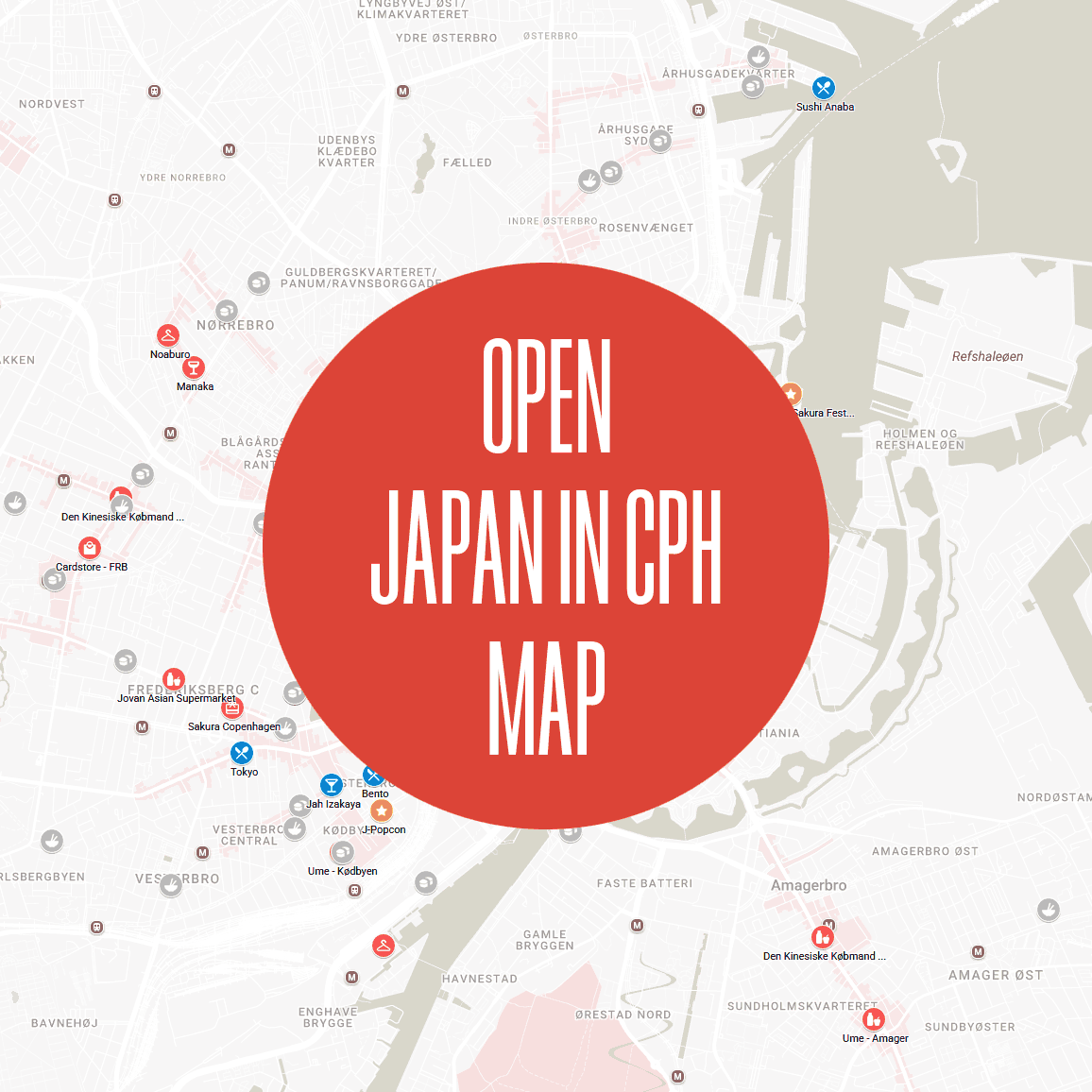
Japan In CPH is your guide to Japanese crafts and traditions in Copenhagen. Here you can discover places where you can experience Japanese craftsmanship, learn new techniques, and become part of communities that share an interest in Japanese art, aesthetics, and cultural traditions.